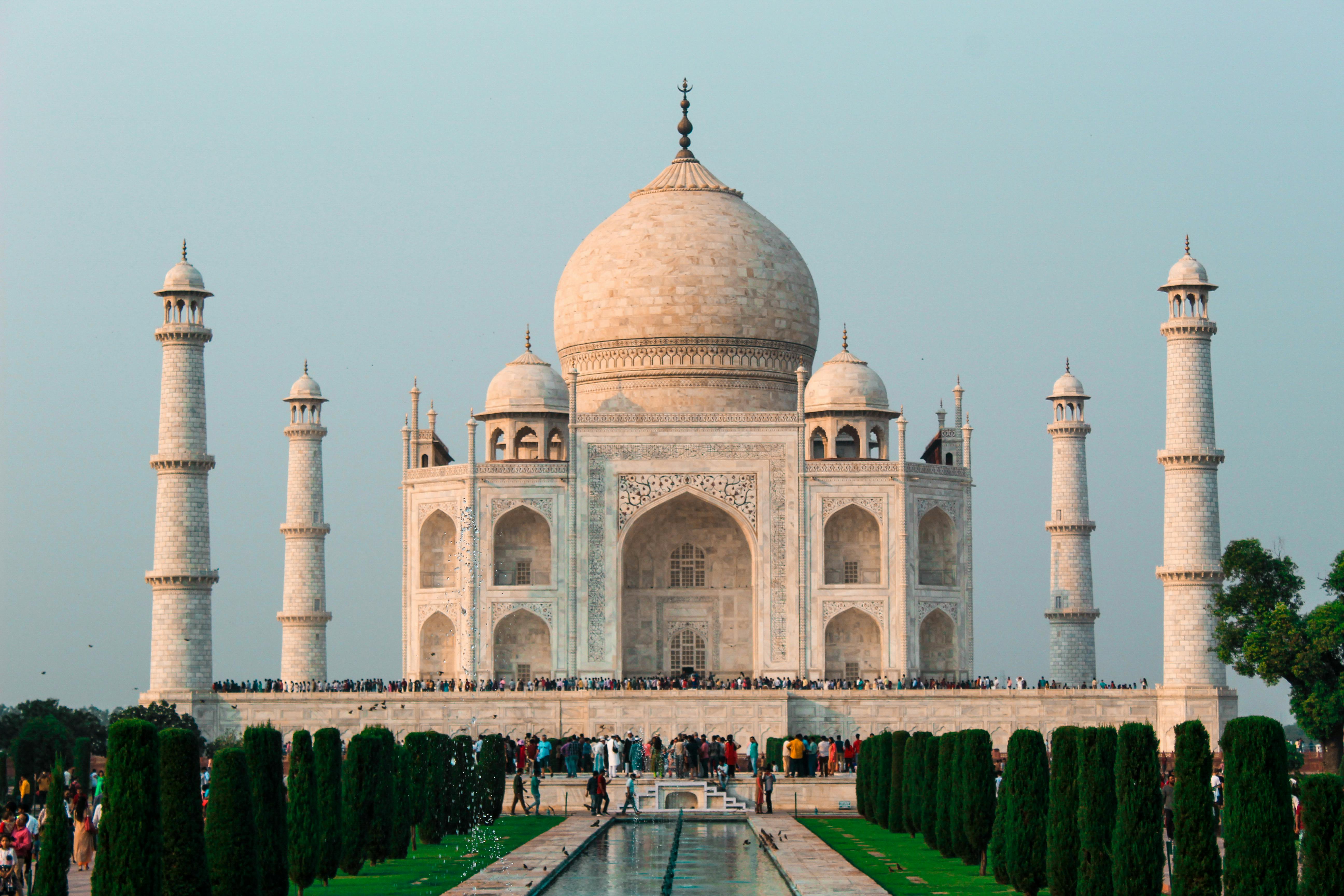
Taj Mahal
The Taj Mahal is an ivory-white marble mausoleum on the right bank of the river Yamuna in Agra, Uttar Pradesh, India. It was commissioned in 1632 by the Mughal emperor Shah Jahan to house the tomb of his favorite wife, Mumtaz Mahal.
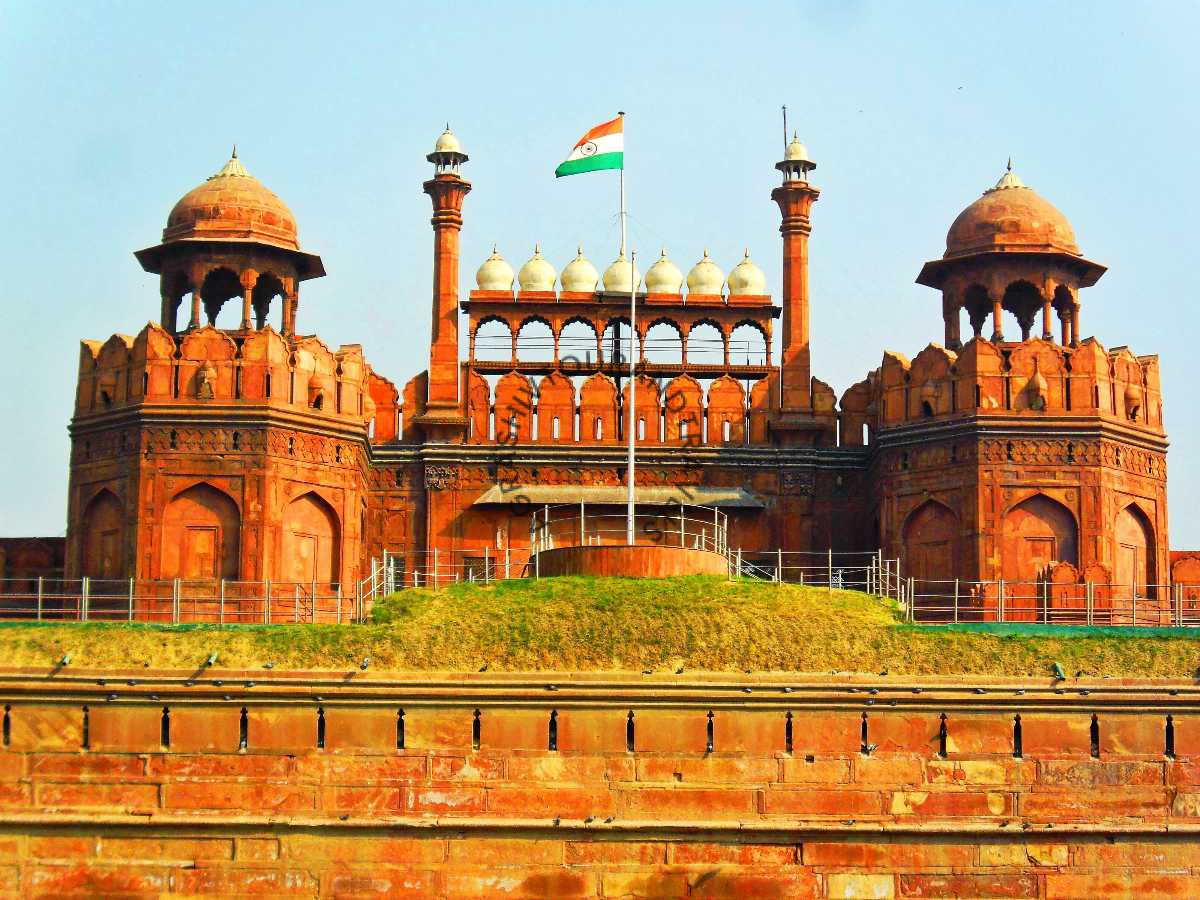
Red Fort
The Red Fort is a historic fort in the city of Delhi in India that served as the main residence of the Mughal Emperors. Emperor Shah Jahan commissioned construction of the Red Fort on 12 May 1638, when he decided to shift his capital from Agra to Delhi.
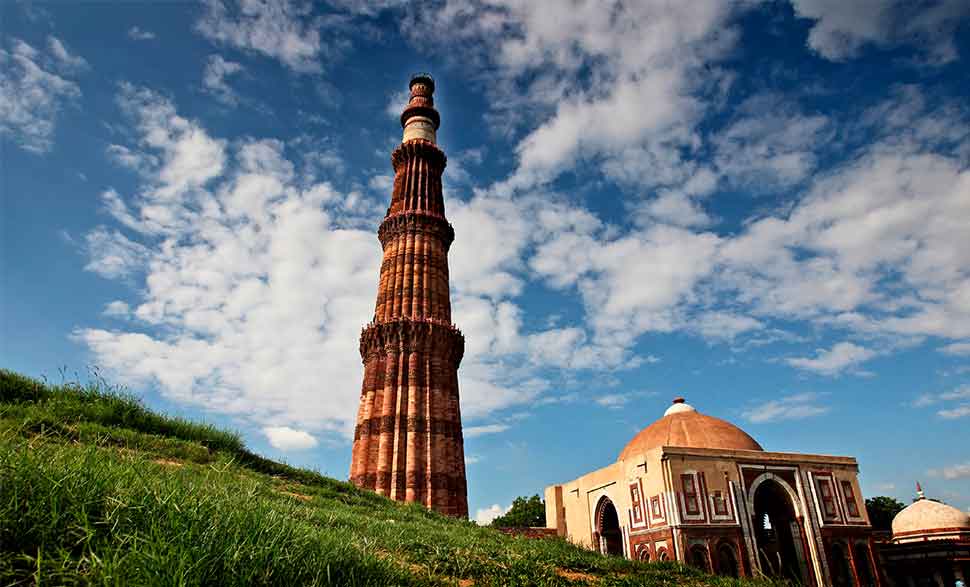
Qutub Minar
Qutub Minar is a minaret and "victory tower" that forms part of the Qutb complex, a UNESCO World Heritage Site in Delhi. It is one of the most visited tourist spots in the city, mostly built between 1199 and 1220.

Hawa Mahal
The Hawa Mahal is a palace in Jaipur, India, built from red and pink sandstone. It is on the edge of the City Palace and was built in 1799 by Maharaja Sawai Pratap Singh. Its unique five-story exterior is akin to the honeycomb of a beehive.
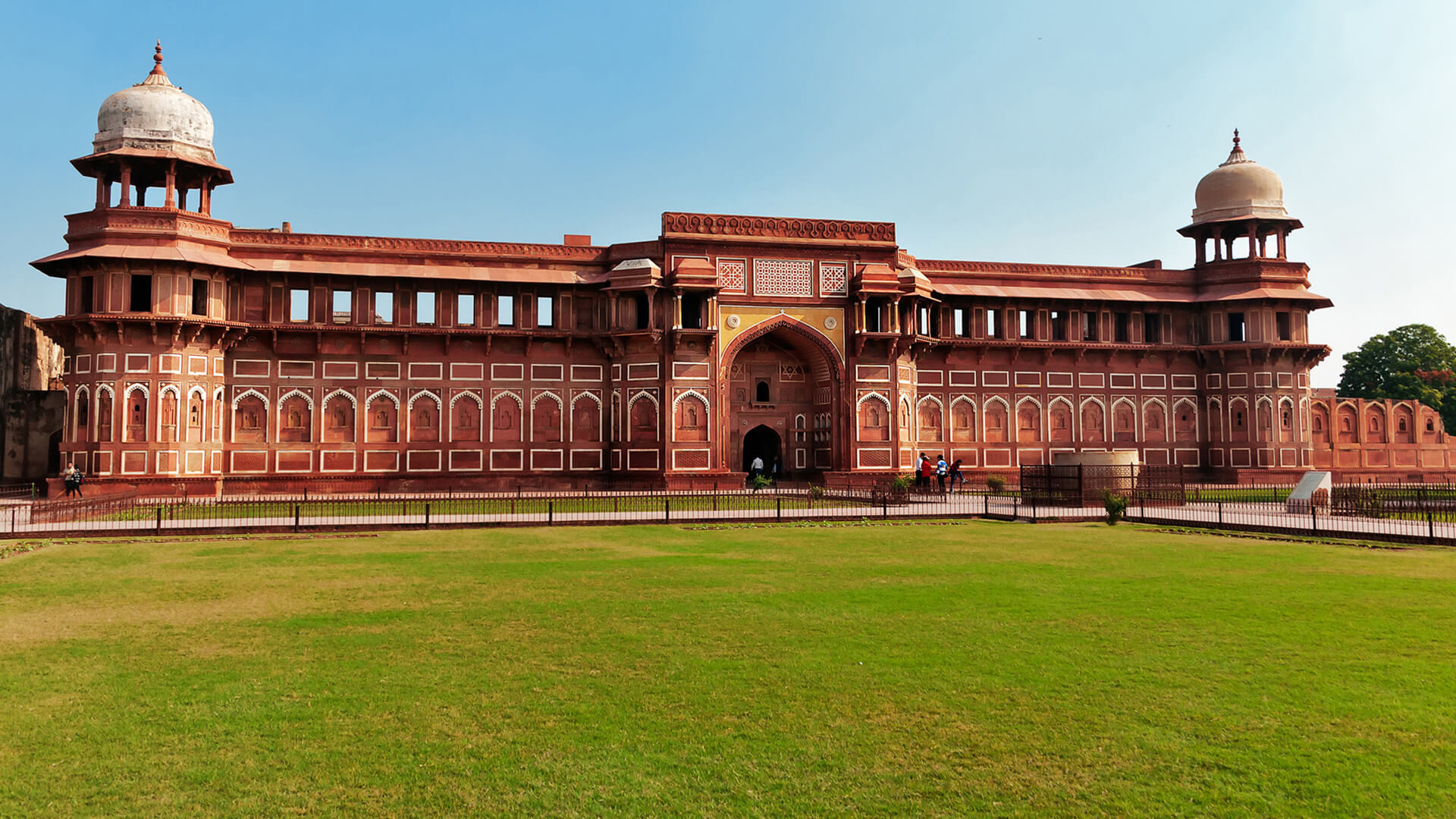
Agra Fort
Agra Fort is a historical fort in the city of Agra in India. It was the main residence of the emperors of the Mughal Dynasty until 1638, when the capital was shifted from Agra to Delhi. The fort can be more accurately described as a walled city.
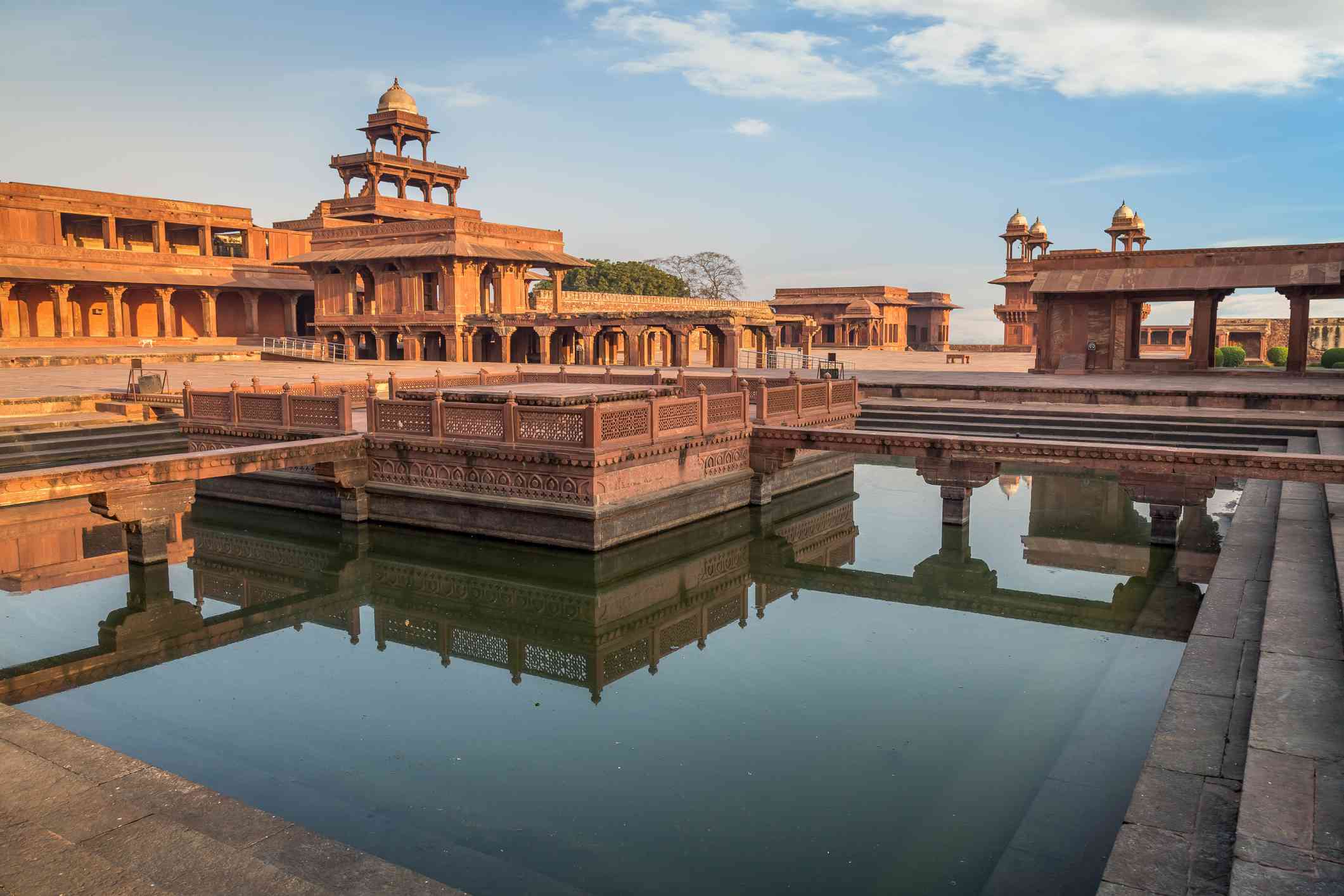
Fatehpur Sikri
Fatehpur Sikri is a town in the Agra District of Uttar Pradesh, India. The city itself was founded as the capital of Mughal Empire in 1571 by Emperor Akbar, serving this role from 1571 to 1585, when Akbar abandoned it due to a campaign in Punjab.